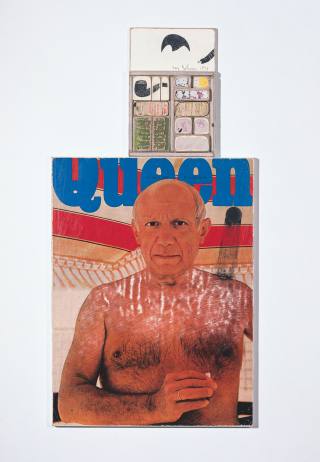
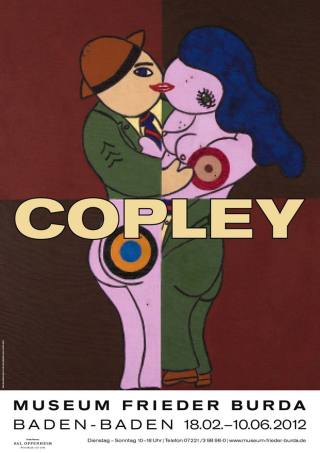
While the term »Pop Art« is primarily associated with American painting, numerous European artists were addressing the same issues at around the same time. They, too, explored the relationship between art and consumerism, drew on the glamorous imagery of fashion, advertising, and entertainment, or questioned changing images of femininitybetween pin-up and emancipation. The exhibition at the Museum Frieder Burda focusses on European painters who worked in or responded to innovations of Pop Art, exploring theirmultifacetted approaches to both representing and subverting the imagery of modern consumer society. To provide insights into the transatlantic exchange fuelling their vision, their works are set in dialogue with a carefully selected group of paintings and sculptures by their American peers. Overall, the show features over 70 works by more than 30 artists.
Represented Artists: Arman, Balder, Werner Berges, Rafael Canogar,
César, John Chamberlain, William Copley, Christa Dichgans, Erró, Gérard
Fromanger, Claude Gilli, Eulàlia Grau, Raymond Hains, Maurice Henry,
Allen Jones, Alex Katz, Kiki Kogelnik, Umberto Mariani, Ivan Messac,
Jacques Monory, Edgar Naccache, Sigmar Polke, Bernard Rancillac, Antonio
Recalcati, Gerhard Richter, Chryssa Romanos, Mimmo Rotella, Niki de
Saint-Phalle, Daniel Spoerri, Peter Stämpfli, Walter Strack, Hervé
Télémaque, Fernand Teyssier, and Andy Warhol.
An
exhibition of the Museum Frieder Burda, Baden-Baden, and the Bucerius
Kunstforum, Hamburg. With the generous support of the Fondation Gandur
pour l’Art, Genève.


,1963,Mixedmaterialsoncanvas,150x182cm,MuseumFriederBurda,Baden-Baden©GerhardRichter2026(29072026).jpg)


(75),1995,Syntheticresin,lacqueronfabric,117x137,4cm,MuseumFriederBurdaBaden-Baden©TheEstateofSigmarPolke,Cologne,VGBild-Kunst,Bonn.jpg)
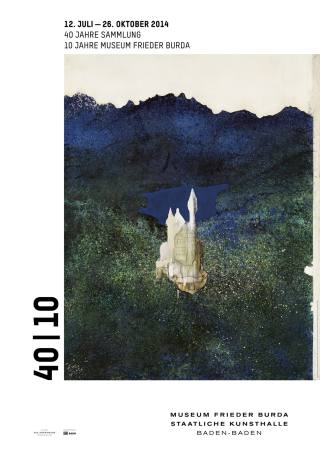
Frieder Burda was born in 1936 as the second son of publisher Franz Burda and entrepreneur Aenne Burda. A passion for art and an unerring eye for quality made him one of the most important international collectors of his generation. The museum he founded now houses a collection of approximately 1,000 works of modern and contemporary art. Particular emphases are placed on German Expressionism, postwar German painting, American art after 1945, and the late work of Pablo Picasso. Accompanying the exhibition Europe in Pop Fever, the museum will present a high-caliber showcase of its collection on the left-hand upper floor from January 23 to June 20, 2027, shedding new light on the museum’s holdings through the lens of representational painting. The exhibition Picasso to Baselitz: Figurative Masterpieces from the Frieder Burda Collection brings together around 30 works by twelve artists—including audience favorites such as Max Beckmann’s Still Life with Cats (1917), Gerhard Richter’s Neuschwanstein Castle (1963), and Pablo Picasso’s Reclining Nude (1968).
Artists:
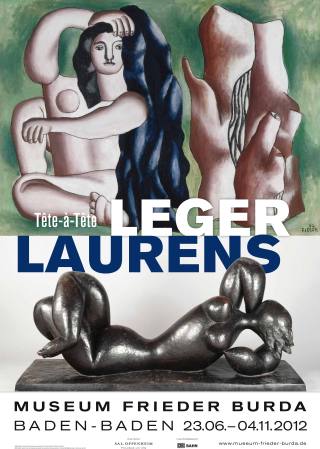
Georg Baselitz, Max Beckmann, William Copley, Jean-Olivier Hucleux, Ernst Ludwig Kirchner, Henri Laurens, Wilhelm Lehmbruck, Markus Lüpertz, Pablo Picasso, Sigmar Polke, Gerhard Richter, and Eugen Schönebeck.
.png)
.png)
.png)
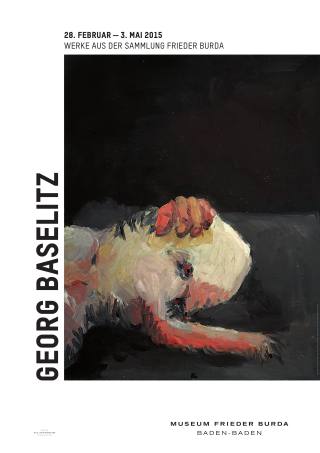
Georg Baselitz (1938–2026) played an outstanding role in the development of the Frieder Burda collection. Frieder Burda particularly admired the artist for the expressiveness, visual power, and profound authenticity of his work. The museum he founded in 2004 now presents the world’s first comprehensive retrospective of Georg Baselitz since his death in 2026. Featuring more than 80 carefully selected works from over 20 collections, the exhibition traces his artistic journey from 1960 to 2025 in an impressive survey. The chronological presentation reveals how radically Baselitz repeatedly pushed and redefined the boundaries of painting and sculpture. At the same time, it offers an intense insight into an artist who resisted categorization throughout his life, continually reinventing his visual language in defiance of the expectations of his time. A particular focus is placed on Baselitz’s emotionally powerful late work, in which his engagement with ageing, death, and transience increasingly moved to the fore. The exhibition thus offers a multifaceted panorama of Baselitz’s entire oeuvre – from the scandal-provoking imagery of his early work to the deeply personal compositions of his final years: a portrait of a radical innovator, uncompromising outsider, and sensuous rebel.



 Home Aktuelle Ausstellung
