Richard Meier & the Museum’s Architecture
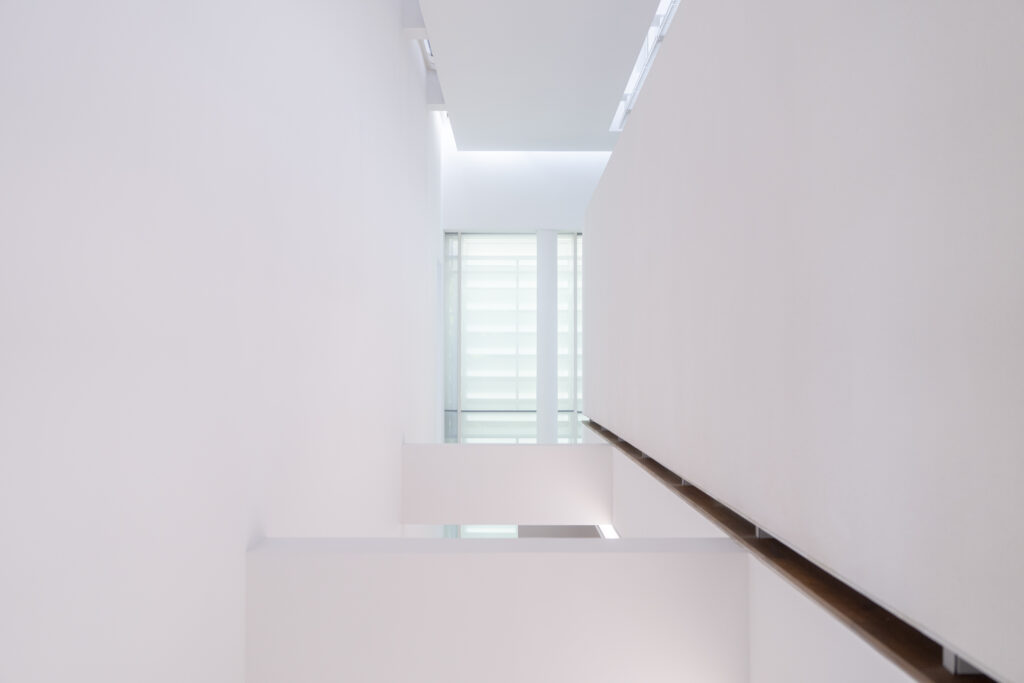
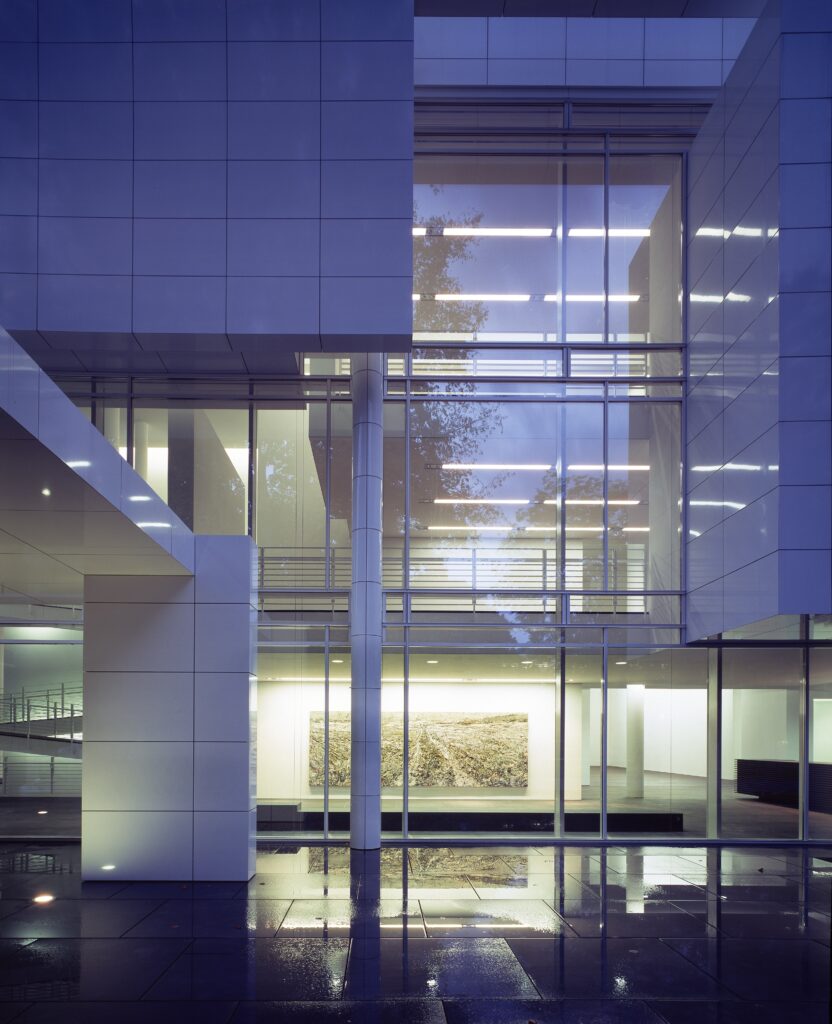
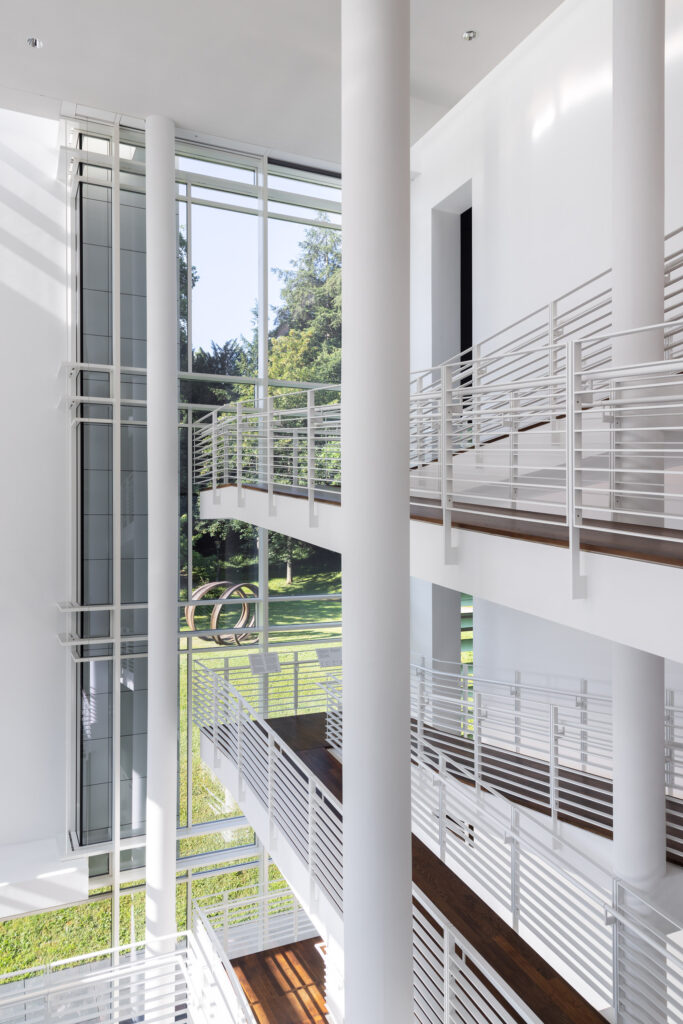
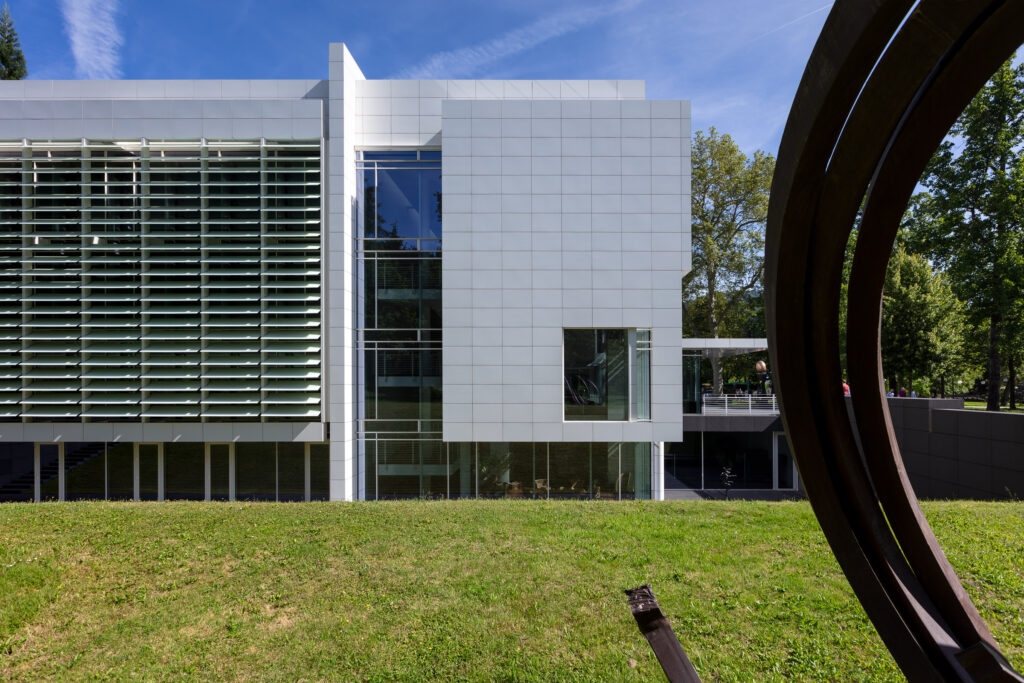
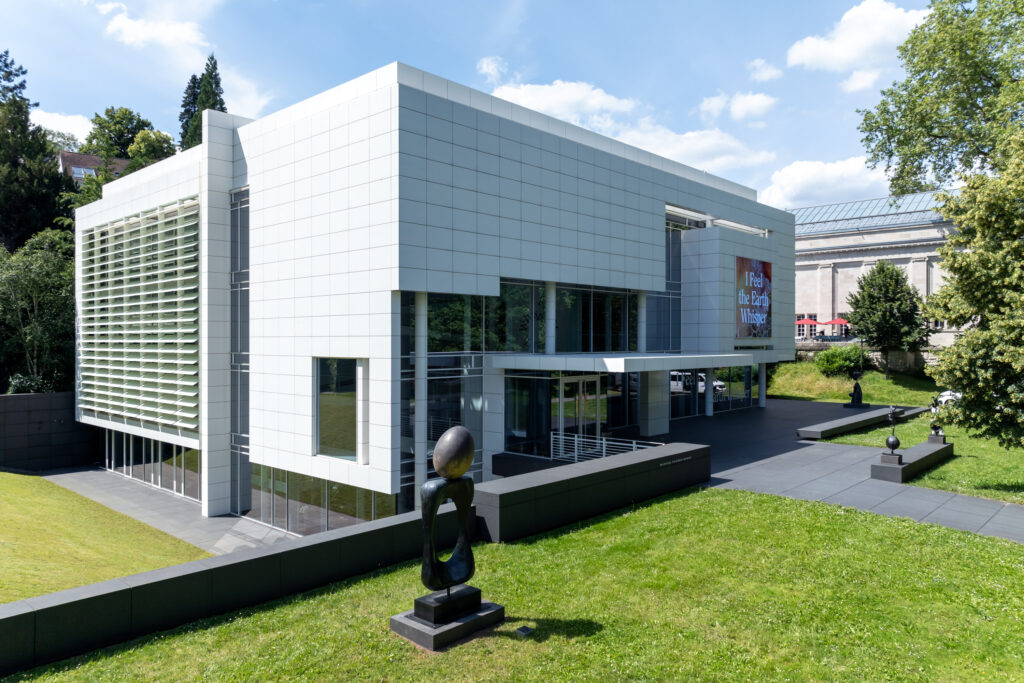
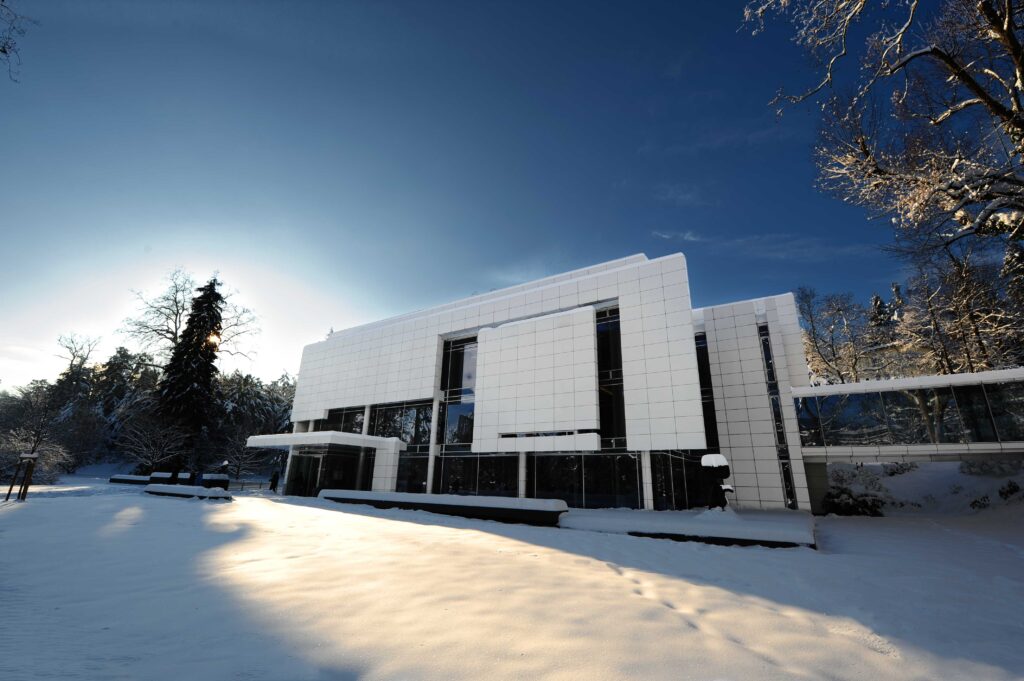
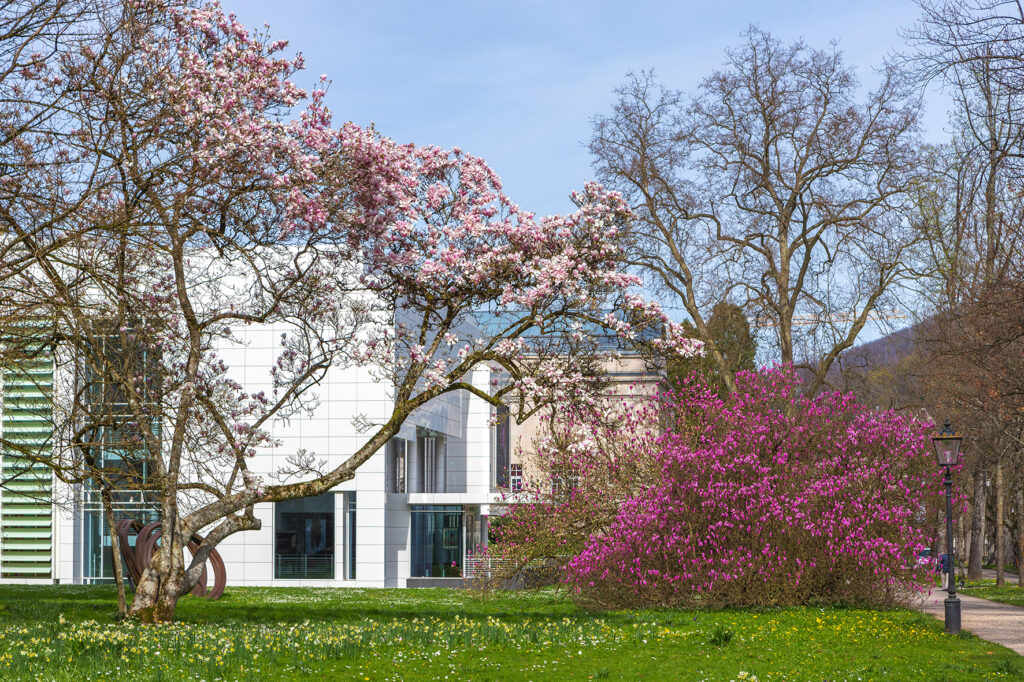
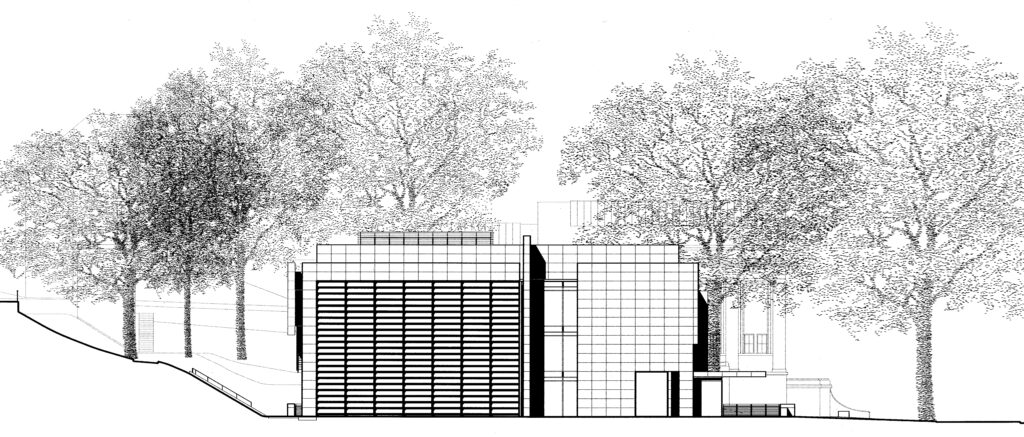
With the construction of the Frieder Burda Museum in 2004, New York architect Richard Meier created a unique, light-filled structure right on the lushly landscaped Lichtentaler Allee, where interior and exterior spaces, modern art, and the romantic park landscape engage in a constant dialogue. The museum's proportions are in harmony with the neighboring neoclassical building of the Staatliche Kunsthalle Baden-Baden, to which it is connected by a glass bridge. With approximately 1,000 m² of exhibition space, Richard Meier designed a bright, open building featuring two large halls, two galleries, and a basement level. Conceived as a museum illuminated by natural light, the architecture reveals its unique qualities especially on the inside: The filtered natural light provides varied illumination of the art that changes with the time of day and the seasons. Visitors move along a ramp through an open sequence of rooms. Glass surfaces repeatedly offer views of the surrounding landscaped garden.
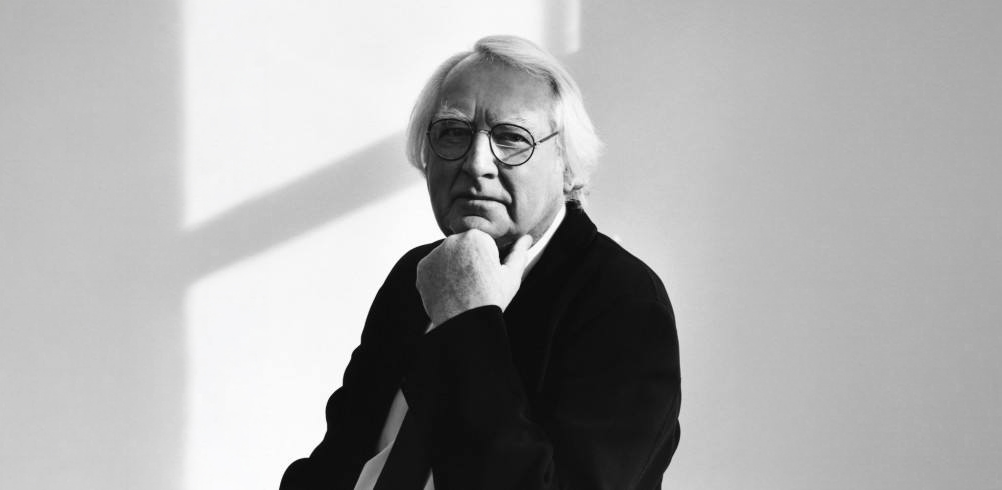
Richard Meier, born in 1934 in Newark, New Jersey, studied architecture at Cornell University in Ithaca, New York. In 1963, he established his own firm in New York. In the years and decades that followed, he completed major public building projects, such as courthouses and city halls in the United States and Europe, as well as museums, corporate headquarters, apartment buildings, and private residences.
Among his best-known projects are the Getty Center in Los Angeles, the High Museum of Art in Atlanta, the Museum of Applied Arts in Frankfurt, the Canal Plus Télévision headquarters in Paris, the Museum of Contemporary Art in Barcelona, and the Atheneum in New Harmony, Indiana. Other projects completed by Richard Meier & Partners Architects include the City Hall and Central Library in The Hague, the Museum of Radio and Television in Beverly Hills, California, the Ulm City Hall, and the SiemensForum in Munich.
Meier held teaching positions at Cooper Union, Princeton, the Pratt Institute, Harvard, Yale, UCLA, and Cornell University.
In 1984, Richard Meier was awarded the Pritzker Architecture Prize, considered the highest honor in the field. In 1989, Richard Meier received the Gold Medal from the Royal Institute of British Architects. In 1992, the French government honored him with the title “Commandeur dans l'ordre des Arts et des Lettres,” and in 1995, he was elected a member of the American Academy of Arts and Sciences. In 1997, Richard Meier received the AIA (American Institute of Architects) Gold Medal, the highest award of the American Institute of Architects, and in the same year, the Praemium Imperiale from the Japanese government in recognition of his artistic life's work. He has been awarded numerous other honors, prizes, and honorary academic degrees.
Facts and Figures About the Construction of the House
PERSONS RESPONSIBLE
Client: Frieder Burda Foundation
Architectural Firm: Richard Meier & Partners Architects LLP, New York
Principal Architect: Richard Meier
Design Partner: Bernhard Karpf
Project Architect: Stefan Scheiber
On-Site Construction Manager: Dipl.-Ing. Peter W. Kruse, Baden-Baden
PROJECT DETAILS
Lot area: 3,642 m²
Built-up area: 2,220 m²
Gross floor area: 4,103 m²
Gross volume: 23,300 m³
TIMELINE
July 3, 2001: Commissioning of the architectural firm Richard Meier & Partners Architects LLP
2001–2002: Planning phase
April 27, 2002: Submission of the building permit application
July 1, 2002: Building permit granted
September 26, 2002: Groundbreaking ceremony
October 10, 2003: Topping-out ceremony
September 2004: Completion
October 22, 2004: Grand opening
Villa im Park
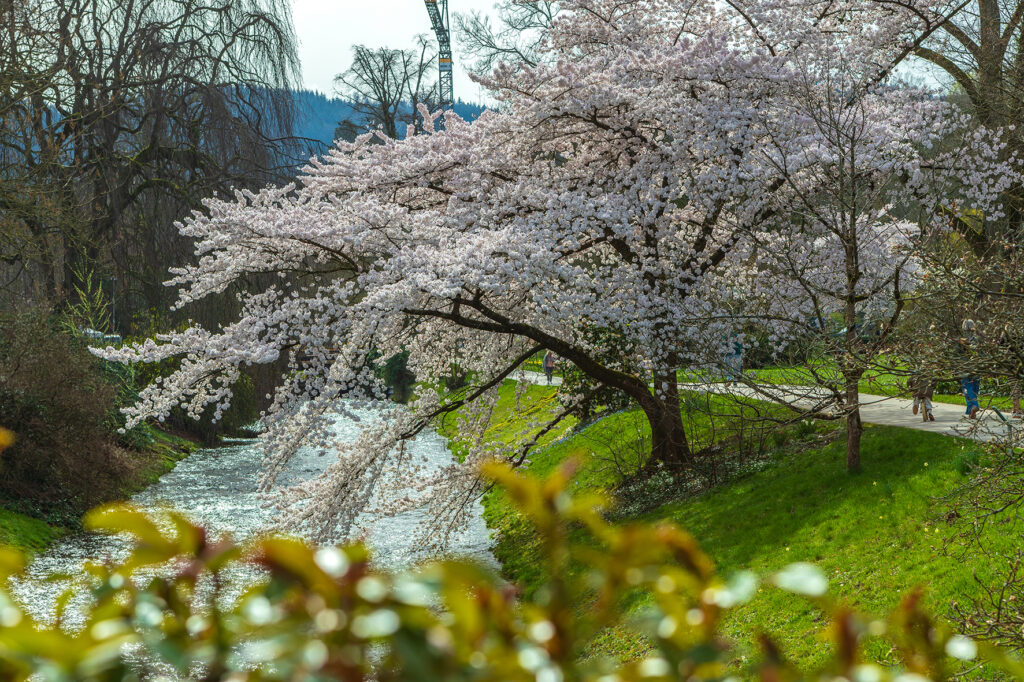
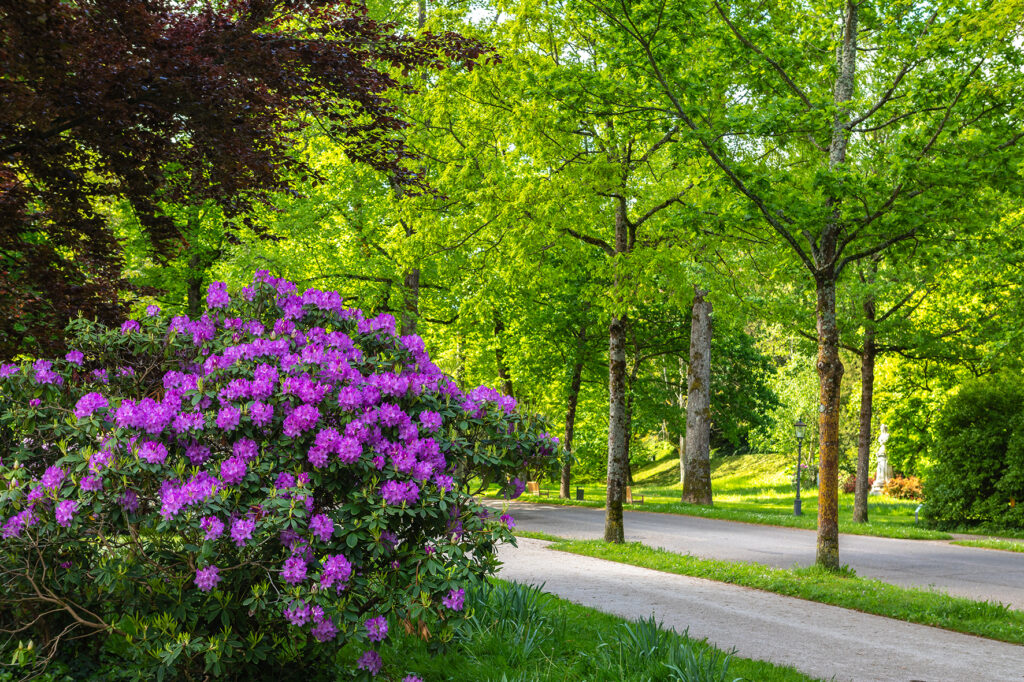
From the very beginning, the Frieder Burda Museum was architecturally conceived as a villa in a park. The building's harmonious integration into the historic park landscape along Lichtentaler Allee is correspondingly spectacular. The world-famous grounds date back to 1655, when the first oak-lined avenue was planted in front of the historic theater. Lichtentaler Allee took on its current form—a 3.5-kilometer-long promenade adorned with lush flowers and blossoms—at the beginning of the 19th century. For art lovers, a visit to the Museum Frieder Burda can thus always be combined with the pure enjoyment of nature—and it captivates as a monument to garden art in every season.